
Looking for a quick experiment with a big wow-factor for your preschooler? This Water Fireworks activity is a hands-on science project that uses water, oil, and food coloring. This experiment teaches little ones about density, solubility, and color mixing- right at your kitchen table! This project is perfect for toddlers, preschoolers, and early learners. This screen-free (and noise-free!) activity is a great way to spark curiosity. This is a great activity to do for the 4th of July or New Years!
BONUS
Want to turn this experiment into a real science lesson? Download my free printable “Scientific Method for Kids” worksheet to guide your preschooler predict, observe, and record their discoveries just like a real scientist! *Lab coat and Einstein hair not included.*
What You’ll Need for This Water and Oil Experiment
- 1 clear glass or jar (a big empty pickle jar works great!)
- Water
- 2 tablespoons of oil (vegetable or canola oil are fine)
- 1 small dish or bowl
- 1 fork or spoon
- Old towels or paper towels to clean any spills
*Tip: The clearer the jar, the better the fireworks will show!
How to Do the Water Fireworks Science Activity
Step 1: Fill your glass or jar about 3/4 full with water. *Hint- start with room temperature water the first time you do the experiment.
Step 2: In a separate small dish, add 2 tablespoons of oil.
Step 3: Add a few drops of food coloring to the oil. 3-5 drops works great. Let your child pick their favorite colors!
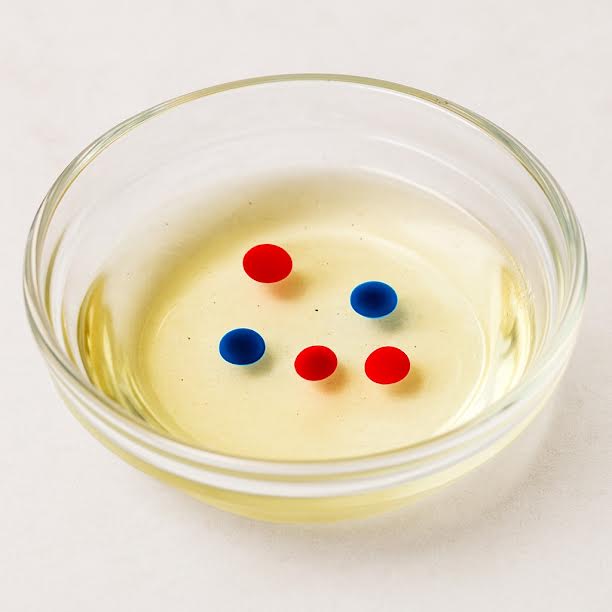
Step 4: Use a fork to gently stir the mixture- just enough to separate the color drops. Don’t over mix!
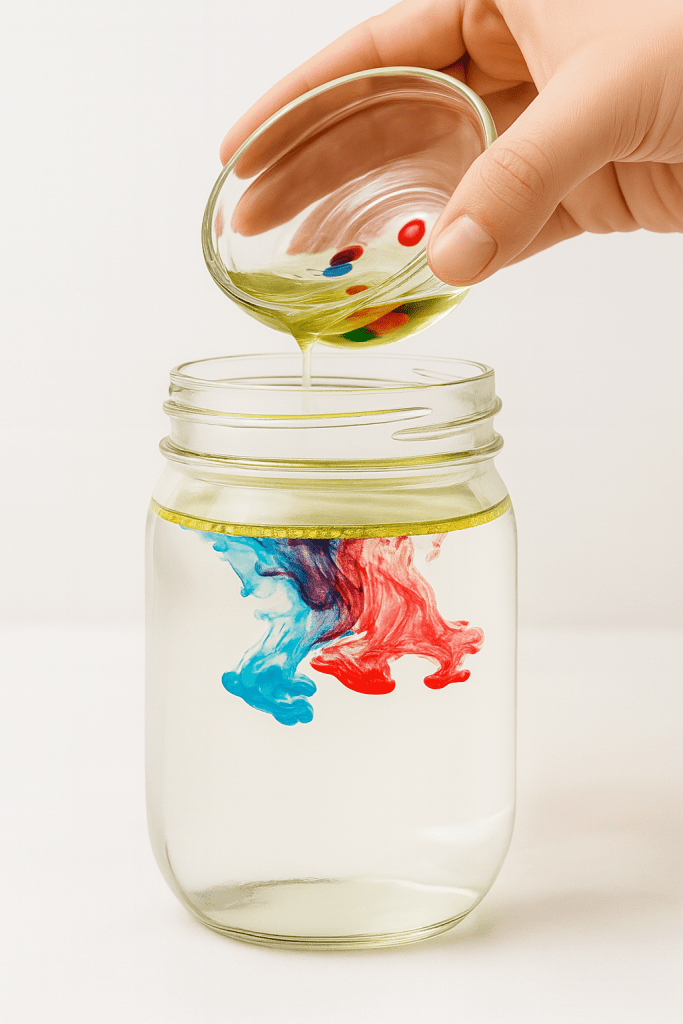
Step 5: Slowly pour your oil and color mixture into the water jar. Watch your child’s delight as the colorful drops slowly sink, then burst and swirl like fireworks! (Tip: Try to pour the oil along the side of the jar. The goal is for the oil to float on top of the water.)
The Science Behind the Experiment (In Preschool Terms!)
This simple water and oil science experiment is a fun way to introduce basic chemistry to young kids.
- Oil and water don’t mix. Oil floats on top because it is less dense (less heavy) than water.
- Food coloring sinks because it is water based, and thus more dense than the oil.
- When the food coloring meets the water, the droplet bursts and mixes with the water. This creates the colorful fireworks effect!
Encourage Your Preschooler’s Curiosity
Try asking your child:
- What do you think will happen next?
- Why do the colors fall through the oil?
- What if we stir the oil more? Less?
- What if we change the temperature of the water? (i.e. Room temperature vs cold vs warm)
These questions will encourage critical thinking and curiosity. Curiosity is at the heart of play-based learning!
Play-Based Learning Benefits
What does this activity nurture in your preschooler?
- Scientific observation skills
- Fine motor development
- Creative thinking
- Cause and effect learning
You could even turn this experiment into a science journal entry! Have your child draw what they saw, name the colors used, and retell the steps of the experiment.
Why I Love This Preschool Activity
As a mom, I find it difficult to keep the level of mess in our house at a manageable level. Selfishly, I prefer to encourage activities that do not require too much clean up. I also look for activities that do not require elaborate set ups and preparation. I need something I can set up in 5-10 minutes and will keep my children engaged while I try to fold a basket of laundry or cook dinner.
This water fireworks activity fits my checklist perfectly! A few basic kitchen supplies are all that is needed. It is simple, low mess, and has a wow-factor that will keep my kids engaged and pique curiosity.
*Use your best judgment on who gets to add the food coloring (you or your preschooler), as this is the part that can get a little messy. Keep an old towel handy for quick clean up!
